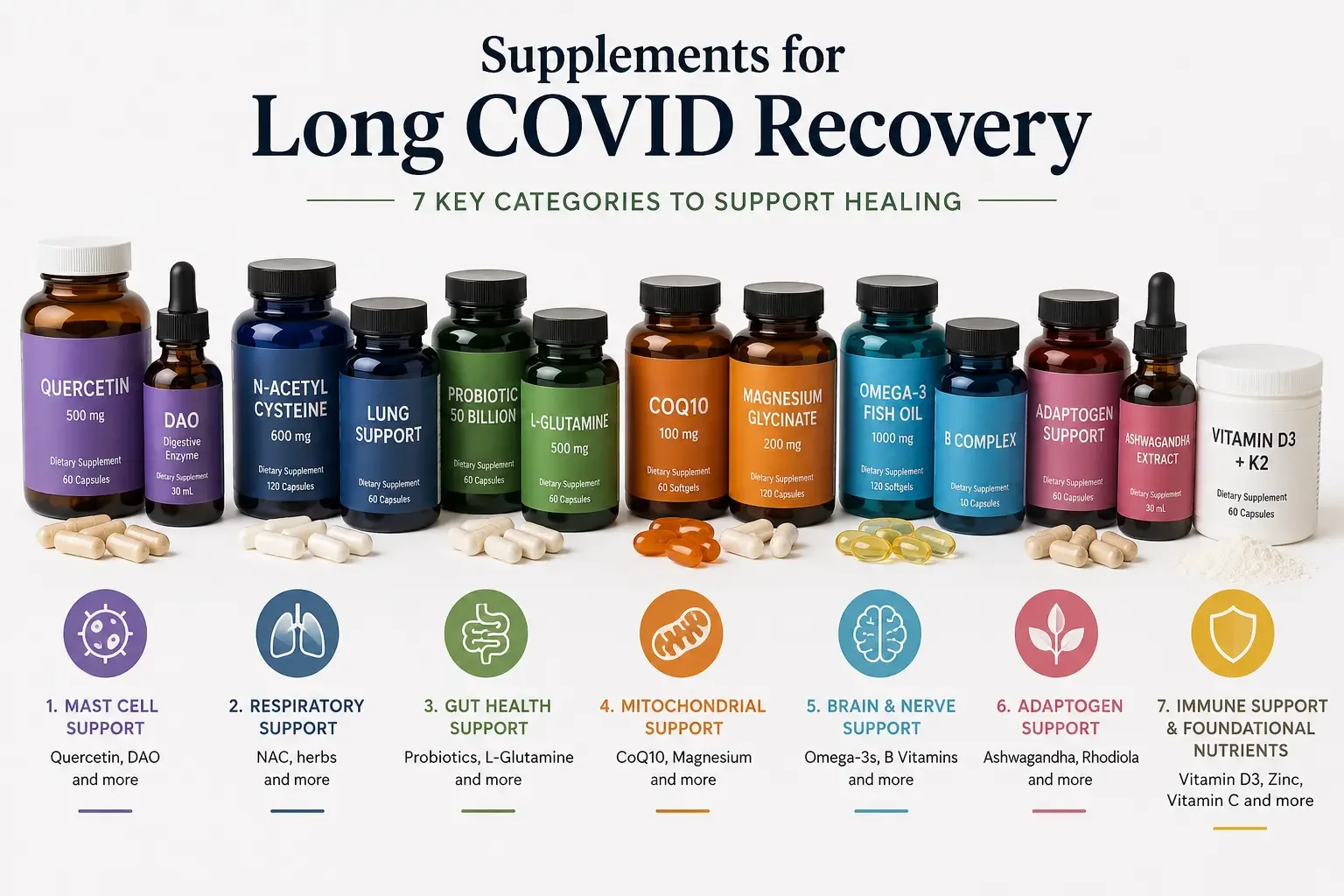
Long COVID is not one single problem. Fatigue, brain fog, dysautonomia, histamine reactions, breathing symptoms, sleep problems, and digestive changes can overlap in very different combinations.
That is why a giant Long COVID stack is usually the wrong place to start. A better approach is to identify the systems causing the most trouble, correct deficiencies, and add one intervention at a time.
What Supplements Can and Cannot Do
There is growing research on nutrition and Long COVID, but there is still no supplement proven to cure the condition. Some interventions have promising early data. Others are supported mainly by mechanisms, small studies, or patient experience.
That distinction matters. A supplement can be reasonable to try without pretending the evidence is stronger than it is.
1. Histamine and Mast-Cell Support
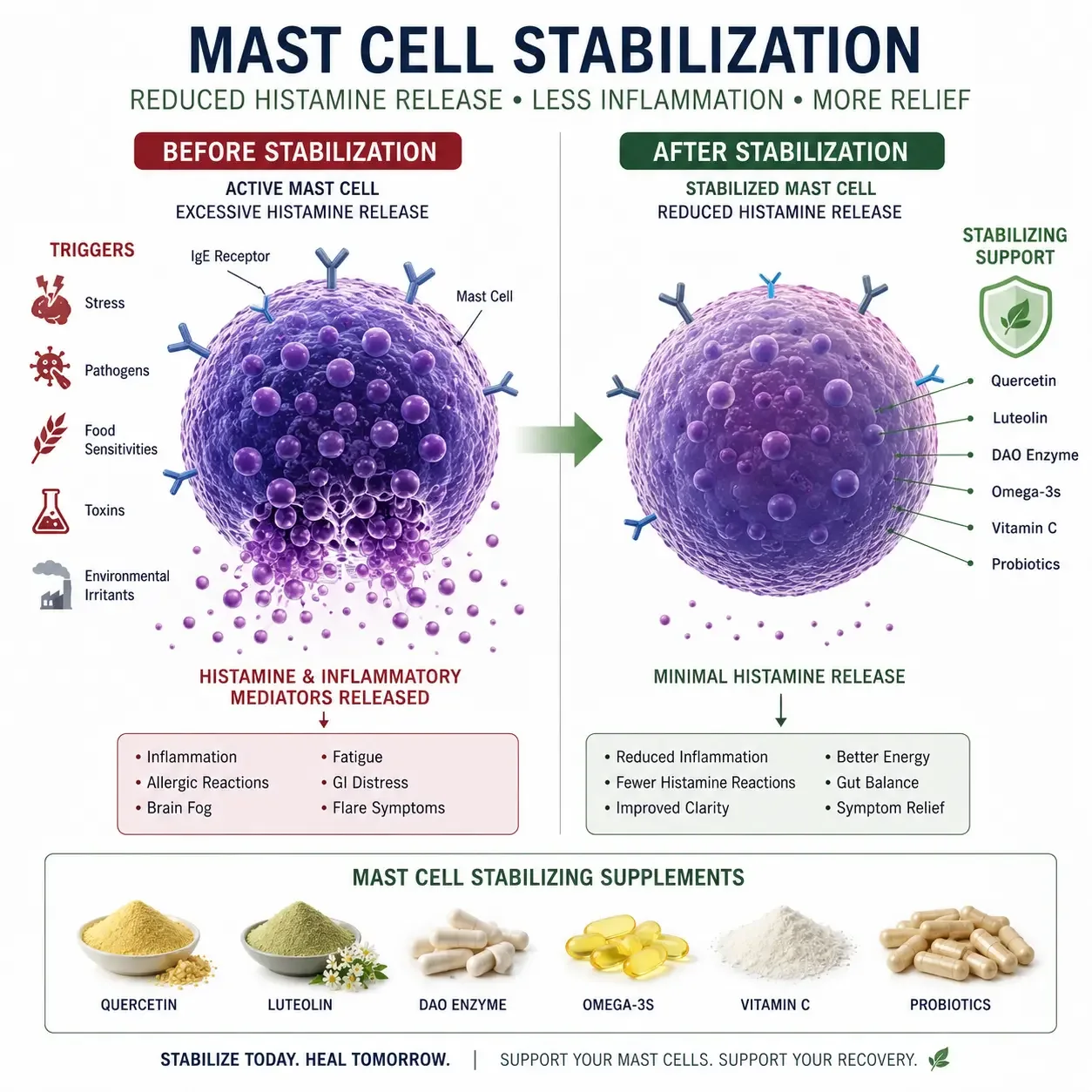
Some people with Long COVID report new food reactions, flushing, itching, rapid heart rate, congestion, or symptoms that resemble mast-cell activation. Small observational studies have also reported improvement with antihistamines in selected patients.
Supplements such as quercetin and luteolin can affect mast-cell signaling in laboratory studies. Human evidence is much thinner, so they should be described as supportive options rather than proven mast-cell treatments.
2. Respiratory and Antioxidant Support
NAC is useful when thick mucus is part of the picture because it has a direct mucolytic effect. Vitamin C and other antioxidants may help correct poor intake, but evidence that they restore lung function in Long COVID is limited.
Breathlessness should still be evaluated for lung, heart, blood, autonomic, and breathing-pattern causes.
3. Gut and Nutrition Support

COVID can be followed by digestive symptoms, altered food tolerance, and microbiome changes. The practical response depends on the problem.
Someone with reflux, diarrhea, constipation, or a very restricted diet may need a different plan from someone with no gastrointestinal symptoms at all. Probiotics, fiber, digestive support, or targeted nutrients may help selected people, but there is no universal gut protocol.
4. Cellular Energy and Exercise Intolerance
Mitochondrial dysfunction and altered energy metabolism are active areas of Long COVID research. That has led to interest in CoQ10, carnitine, creatine, riboflavin, magnesium, and other nutrients involved in cellular energy production.
The biology is plausible, but supplement trials remain limited. The bigger issue is pacing: people with post-exertional malaise can get worse when they repeatedly push beyond their energy limit.
5. Core Micronutrients

Vitamin D, magnesium, B12, folate, iron, zinc, and other nutrients matter when there is a deficiency or poor intake. Correcting a true deficiency can improve symptoms that overlap with Long COVID.
Testing can be useful because fatigue is not always caused by Long COVID alone. Anemia, thyroid disease, B12 deficiency, and other treatable problems can coexist.
6. Brain Fog and Nervous-System Support
Brain fog can involve attention, memory, processing speed, sleep, autonomic dysfunction, inflammation, and post-exertional worsening. No supplement has been proven to fix all of those pathways.
Sleep, pacing, hydration, medication review, and treatment of specific deficiencies often deserve attention before adding a long list of nootropics.
7. Cardiovascular and Circulatory Support
Long COVID can involve palpitations, orthostatic intolerance, endothelial dysfunction, and changes in exercise tolerance. Some people use electrolytes, taurine, citrulline, or other products aimed at circulation.
These may affect blood pressure or vascular function, but cardiovascular symptoms deserve proper evaluation. Supplements should not be used to mask chest pain, fainting, or unexplained tachycardia.
How to Build a Smarter Plan
Start with the symptoms causing the biggest loss of function. Then look for deficiencies, medication effects, sleep problems, blood-pressure issues, and other conditions that can be treated directly.
Add one or two interventions at a time. Track what changes. If a supplement causes a flare, do not assume that detox is the explanation. The product may simply not agree with you.
The Bottom Line
Supplements can be useful during Long COVID recovery, but they work best when they are matched to a specific problem. The evidence ranges from clinical trials to early mechanistic research and patient reports.
The goal is not to take everything. It is to use the smallest number of interventions that make sense for your symptoms and evidence.
How to Prioritize Without Taking 20 Products
A useful order is: first correct a clear deficiency, then address the symptom that limits daily life the most. If standing causes tachycardia and dizziness, hydration and autonomic support may matter more than a nootropic. If food reactions dominate, histamine and gut issues may come first.
Give each change enough time to judge it unless it causes a clear adverse reaction. Keep the plan simple enough that you can tell what changed.
Also see our related guide to the parasite-cleanse discussion for Long COVID.
Common Questions About Long COVID Supplements
How long should I try a supplement? It depends on the goal. Electrolytes may have an immediate effect, while correcting a vitamin deficiency or evaluating a metabolic supplement may take weeks. Stop earlier if symptoms clearly worsen.
Are patient reports useful? Yes, especially for generating ideas in a new illness. But patient reports are not proof. Repeated anecdotes become more useful when they line up with a plausible mechanism and early clinical data.
What should I avoid? Be cautious with products that promise to “detox spike,” reset the immune system, or cure Long COVID with one pathway. Long COVID is too heterogeneous for that level of certainty.
Can supplements interact with prescriptions? Absolutely. Nattokinase, piperine, berberine, high-dose niacin, sedating herbs, and many other products can change bleeding risk, blood pressure, glucose, or medication levels.