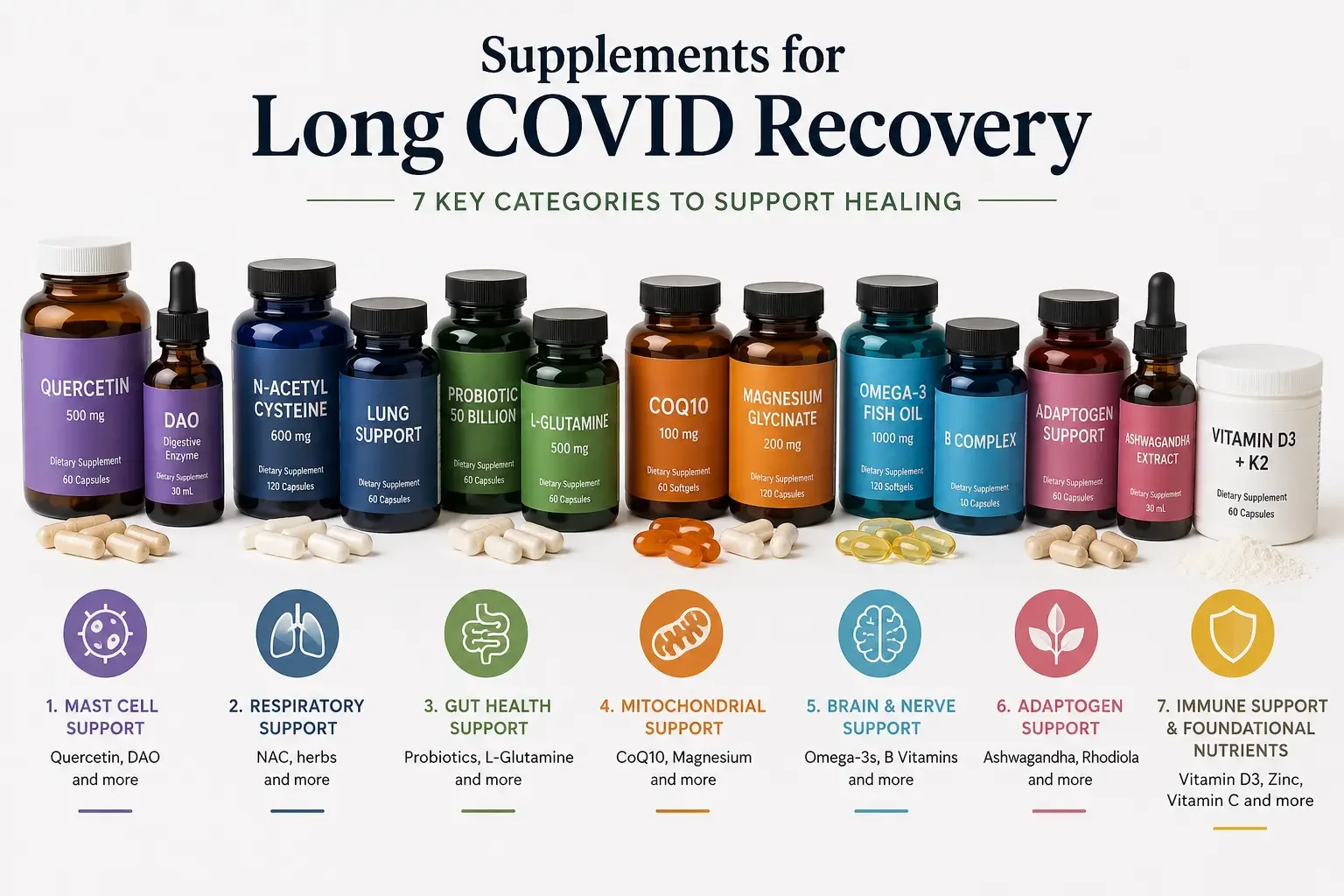
Some people with Long COVID develop flushing, itching, congestion, rapid heart rate, digestive reactions, headaches, or new food sensitivities. These symptoms can resemble histamine intolerance or mast-cell activation.
That does not mean every Long COVID patient has mast cell activation syndrome. It does mean histamine pathways may be worth discussing when the symptom pattern fits.
What We Know About Histamine and Long COVID
Small studies and observational reports have found that some Long COVID patients improve with H1 and H2 antihistamines. That is interesting, but it is not the same as proving mast-cell activation is the cause of Long COVID.
CDC guidance also recognizes that some Long COVID patients have symptom patterns that overlap with mast-cell activation and dysautonomia.
1. Luteolin

Luteolin is a plant flavonoid that can inhibit mast-cell mediator release in cell studies. Newer laboratory work continues to support that mechanism.
The limitation is human evidence. We do not have large trials showing that oral luteolin treats Long COVID or MCAS. It is better described as a mechanistically interesting option than a proven mast-cell stabilizer in patients.
2. Quercetin
Quercetin has similar laboratory evidence for reducing mast-cell activation. Small human trials in allergy have also reported improvement in nasal and eye symptoms with certain bioavailable formulations.
That gives quercetin more human context than many flavonoids, but Long COVID-specific evidence is still limited.
3. DAO Enzyme

Diamine oxidase, or DAO, helps break down histamine in the gut. Supplemental DAO is mainly aimed at histamine coming from food.
It may help some people who react to histamine-rich meals, but it does not stabilize mast cells throughout the body. If symptoms have no clear relationship to food, DAO may do very little.
4. Ginger and 5. MSM
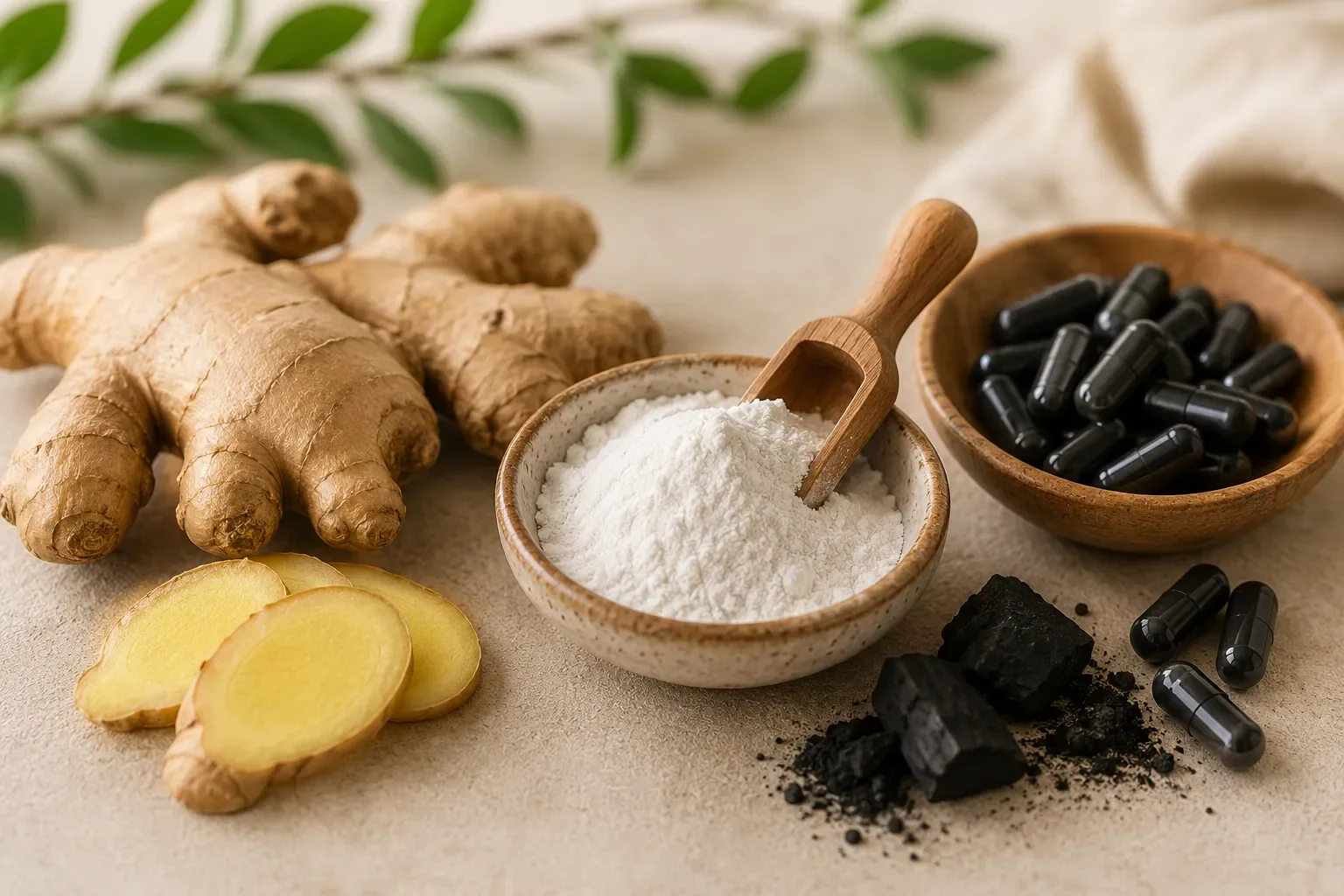
Ginger has anti-inflammatory and digestive effects and may help nausea. MSM is used for joint pain and inflammation.
Neither has strong evidence as a Long COVID mast-cell treatment. They may still be useful for other symptoms, but calling them mast-cell stabilizers overstates what has been shown.
6. Activated Charcoal
Activated charcoal can bind certain substances in the gastrointestinal tract. It is useful in specific poisoning situations under medical guidance.
Routine use for histamine detox is not well supported. Charcoal can also bind medications and nutrients, so it should be separated from oral drugs and should not become a daily habit without a clear reason.
A Practical Histamine Strategy
First look for patterns. Does a meal trigger symptoms? Do leftovers, fermented foods, alcohol, heat, exercise, or certain medications make things worse?
A short symptom and food log can be more useful than adding six supplements at once. If antihistamines or a low-histamine trial clearly help, that information may also guide a conversation with a clinician.
The Bottom Line
Histamine and mast-cell pathways may matter for a subgroup of people with Long COVID. Antihistamines have some early human evidence, while most supplement claims rely more heavily on laboratory data, allergy studies, or patient experience.
That does not make the supplements useless. It means the evidence should be described honestly.
Food Histamine and Mast-Cell Activation Are Not the Same Thing
Histamine intolerance is often used to describe symptoms that appear after eating histamine-rich foods because the body cannot break histamine down quickly enough. Mast-cell activation involves immune cells releasing histamine and other mediators inside the body.
The two can overlap, but they are not identical. DAO is aimed mainly at histamine in the gut, while antihistamines block histamine receptors and compounds such as quercetin are being studied for effects on mast-cell signaling.
For related reading, explore respiratory support for Long COVID, supplements for Long COVID recovery, and our Long COVID section.
Common Questions About Histamine Flares
Do I need a permanent low-histamine diet? Not necessarily. Very restrictive diets can create nutrition problems. A short trial may help identify whether histamine-rich foods matter, followed by careful reintroduction when possible.
Can stress and exercise trigger symptoms? Some patients report flares with heat, stress, exercise, alcohol, infections, and hormonal changes. Tracking the pattern can help separate food-only reactions from a broader mast-cell or autonomic problem.
Should I start six products at once? No. Introduce one change at a time so you can tell whether it helps, does nothing, or makes symptoms worse.