Written by 17:41 COVID Recovery

Respiratory Supplements for Long COVID: 4 Proven Options to Clear Congestion and Restore Lung Function

The right respiratory supplements for Long COVID can clear congestion and rebuild lung function. Here are the 4 that work best.
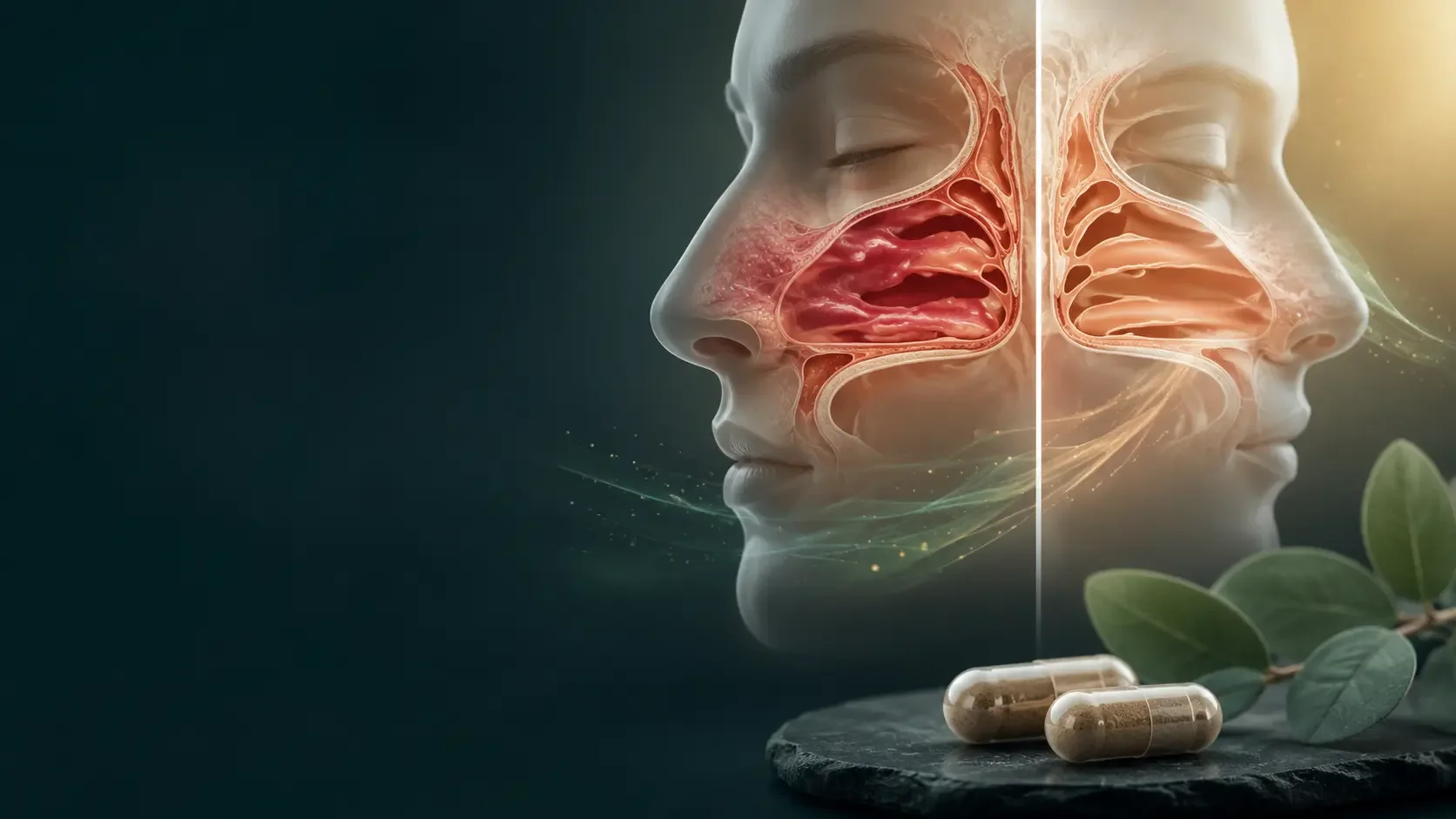
Four respiratory supplements for Long COVID including NAC and bromelain capsules
respiratory supplements for covid and long covid
Respiratory Supplements for Long COVID: 4 Proven Options to Clear Congestion and Restore Lung Function 6

Medical Disclaimer: This article is for informational purposes only and is not a substitute for professional medical advice, diagnosis, or treatment. Always consult a qualified healthcare provider before making changes to your diet, supplement routine, or health plan.

Shortness of breath, a lingering cough, and reduced exercise tolerance are among the most common complaints people carry with them long after their initial COVID-19 infection has cleared. The right respiratory supplements for Long COVID can meaningfully speed up the repair of lung tissue and clear the deep inflammation that keeps your breathing from fully returning to normal.

COVID-19 causes damage that goes beyond the initial infection itself. Oxidative stress (cellular damage caused by unstable molecules called free radicals) and ongoing inflammation in lung tissue are two of the primary reasons breathing problems persist for months after the virus has technically cleared. Respiratory supplements for Long COVID work by directly targeting these two mechanisms, rather than simply masking symptoms with a cough suppressant or waiting for time alone to resolve the damage.

Four respiratory supplements for Long COVID including NAC and bromelain capsules
Respiratory Supplements for Long COVID: 4 Proven Options to Clear Congestion and Restore Lung Function 7

This guide covers the four respiratory supplements for Long COVID with the strongest research and clinical support behind them, how each one works, and how to think about combining them into a daily routine that supports lasting lung recovery.

Why Respiratory Supplements for Long COVID Matter After Infection

Long COVID frequently leaves measurable changes in lung tissue, even in people who had only mild initial illness. Scarring, ongoing inflammation, and impaired oxygen exchange can all persist well after a person tests negative for the virus itself. This is why so many Long COVID patients describe feeling like their lungs “never fully came back,” even months into recovery.

The right respiratory supplements for Long COVID address this gap between technically recovering from infection and actually regaining full lung function. Rather than waiting passively for tissue to heal on its own, targeted supplementation can accelerate the antioxidant and anti-inflammatory processes your body needs to repair damaged airways and alveoli (the tiny air sacs in your lungs where oxygen exchange happens). Many people find that starting respiratory supplements for Long COVID early in their recovery, rather than waiting to see if symptoms resolve on their own, produces noticeably better outcomes.

It is worth noting that respiratory symptoms in Long COVID often overlap with symptoms driven by mast cell activation, meaning that combining respiratory supplements for Long COVID with mast cell support frequently produces better results than either approach alone. If flushing, histamine reactions, or unpredictable flares accompany your breathing symptoms, addressing both categories together tends to work best.

Timing expectations matter here too. Unlike some other Long COVID recovery categories where improvement can feel fairly quick, respiratory supplements for Long COVID generally require more patience. Lung tissue simply repairs more slowly than gut lining or even mitochondrial function, since the structural damage involved, scarring and altered alveolar architecture, takes longer to remodel than cellular-level dysfunction elsewhere in the body. Setting realistic expectations from the outset helps prevent the discouragement that leads some people to abandon a good protocol before it has had time to work.

NAC Glutathione Support: The Foundation of Respiratory Supplements for Long COVID

NAC, or N-acetylcysteine, is widely considered the single most important compound among respiratory supplements for Long COVID. NAC works as a direct precursor to glutathione, your body’s master antioxidant, meaning your cells use NAC as raw material to manufacture more glutathione internally. This NAC glutathione connection is the central reason NAC appears at the top of nearly every respiratory recovery protocol.

A 2022 review published in PubMed examined NAC as an adjunctive treatment for post-COVID-19 pulmonary fibrosis, noting that glutathione deficiency has been consistently observed in patients with ongoing respiratory symptoms following COVID-19 infection. The review concluded that NAC’s antioxidant and anti-inflammatory properties, combined with its low cost and good tolerability, make it a reasonable addition to a broader recovery protocol.

Beyond its antioxidant role, NAC also acts as a mucolytic (a substance that thins and loosens mucus), making it easier for your body to clear built-up secretions from the airways. This dual action, NAC glutathione replenishment paired with mucus clearing, is part of why NAC forms the foundation that most other respiratory supplements for Long COVID are built around.

Most people take NAC in doses of 600 to 1,800 milligrams daily, often split into two doses. Some people notice improved breathing capacity within two to three weeks, though full antioxidant restoration and tissue repair benefits typically take six to twelve weeks of consistent use. NAC has a distinct sulfur smell that some people find unpleasant, though this fades with regular use and does not indicate a problem with the supplement.

It is worth understanding why glutathione depletion happens in the first place. Viral infections, including COVID-19, place enormous oxidative stress on your cells, and your body burns through glutathione reserves faster than it can replace them during and after acute illness. This is part of why so many Long COVID patients test low on glutathione markers even months after their initial infection has resolved, and why simply waiting for levels to normalize on their own often does not work without targeted NAC glutathione support.

NAC supporting glutathione production as one of the top respiratory supplements for Long COVID
Respiratory Supplements for Long COVID: 4 Proven Options to Clear Congestion and Restore Lung Function 8

Bromelain Inflammation Control: Natural Mucus and Airway Support

Bromelain is an enzyme derived from pineapple stems, and it works through a mechanism distinct from NAC. This bromelain inflammation control mechanism comes from its ability to directly break down inflammatory proteins circulating in respiratory tissue, rather than replenishing antioxidants the way NAC does.

A PubMed review of bromelain’s potential in managing COVID-19 highlighted both its anti-inflammatory and anticoagulant (blood-thinning) properties, noting these combined actions may help slow disease progression and support recovery. This is particularly relevant for Long COVID, where ongoing inflammation and mild clotting abnormalities both contribute to persistent breathing difficulty.

Bromelain also has mucolytic properties similar to NAC, and some research has explored combining the two compounds specifically because their mechanisms complement each other so well. Typical bromelain doses range from 500 to 1,000 milligrams daily, taken on an empty stomach for the strongest anti-inflammatory effect, or with food if primarily targeting digestive support alongside respiratory benefits.

One practical note: because bromelain has mild blood-thinning properties, anyone taking prescription anticoagulants or preparing for surgery should discuss bromelain with their doctor before starting, since combining it with blood thinning medications can increase bleeding risk. This bromelain inflammation benefit is significant enough that some functional medicine practitioners consider it a near-essential addition once NAC has been established in your routine, particularly for people whose primary complaints involve chest tightness or a persistent inflammatory cough rather than pure fatigue.

Nicotinic Acid Sinus Relief: What to Expect

Nicotinic acid, a form of vitamin B3, works through an entirely different pathway than NAC or bromelain. The nicotinic acid sinus connection comes from its vasodilating effect (temporarily widening blood vessels), which can help open nasal and sinus passages that feel chronically blocked after Long COVID.

Unlike the other respiratory supplements for Long COVID covered here, nicotinic acid produces an immediate and noticeable physical sensation called a niacin flush: skin redness, warmth, and mild tingling that typically appears within 15 to 30 minutes of taking a dose and resolves within about an hour. This is a normal, expected response to the vasodilation and not a sign of an allergic reaction, though it can be uncomfortable the first few times you experience it.

It is worth being clear that the evidence connecting nicotinic acid specifically to sinus decongestion is largely anecdotal rather than backed by controlled clinical trials in Long COVID populations. Many people report meaningful relief, but this supplement works through a general vasodilation mechanism rather than a mechanism studied specifically for sinus disease, so individual results vary considerably. Starting with a low dose of 50 to 100 milligrams is wise, since the flush response intensifies with higher amounts.

For people who find the flushing sensation too uncomfortable, a flush-free form called inositol hexanicotinate exists, though it works more slowly and some practitioners question whether it delivers the same nicotinic acid sinus benefit as the standard flushing form. If you are new to nicotinic acid, trying a small dose of the standard form first, even if just to understand what the flush feels like, is usually more informative than starting with the flush-free version.

Nicotinic acid supporting sinus relief as part of respiratory supplements for Long COVID
Respiratory Supplements for Long COVID: 4 Proven Options to Clear Congestion and Restore Lung Function 9

Vitamin C Immune Support for Lung Recovery

Vitamin C rounds out this core group of respiratory supplements for Long COVID by supporting immune function and providing additional antioxidant capacity. Vitamin C immune support is well established in general immunology, and it takes on particular relevance in Long COVID given the ongoing immune dysregulation many patients experience.

For Long COVID recovery specifically, the form of vitamin C matters. Standard ascorbic acid can be irritating to a sensitive gut and may worsen histamine-related symptoms in people dealing with concurrent mast cell activation. Calcium ascorbate or sodium ascorbate, sometimes labeled as “buffered vitamin C,” provide the same immune and antioxidant benefits without the gut irritation or histamine concerns that plain ascorbic acid can trigger.

High-dose vitamin C protocols for respiratory support typically range from 1,000 to 3,000 milligrams daily, split across two or three doses to improve absorption and reduce the likelihood of digestive upset. Vitamin C works synergistically with NAC, since both compounds support your body’s overall antioxidant capacity through complementary pathways.

Vitamin C immune support extends beyond simple antioxidant activity. It also plays a role in collagen production, which matters for repairing the connective tissue that supports healthy lung structure, and it supports the function of white blood cells that help clear lingering viral debris and prevent secondary respiratory infections while your lungs are still healing. This combination of immune, antioxidant, and structural support is why vitamin C rarely gets left out of a well-built respiratory recovery protocol, even though it tends to receive less attention than NAC or bromelain.

Frequently Asked Questions About Respiratory Supplements for Long COVID

Which respiratory supplements for Long COVID should I start with?

Most people begin with NAC, since it addresses both antioxidant depletion and mucus clearance simultaneously and has the strongest research base among the four options covered here. Vitamin C is typically added alongside NAC from the start, since the two work synergistically.

How long does it take for respiratory supplements for Long COVID to improve breathing?

Some people notice modest improvements in mucus clearance and breathing ease within days, others can take weaks, but meaningful tissue-level repair and exercise tolerance improvements typically take two to three months of consistent use. Respiratory tissue heals more slowly than many other systems affected by Long COVID.

Is the niacin flush from nicotinic acid dangerous?

No, the flush is a normal, temporary vasodilation response and is not dangerous for most healthy adults, though it can feel alarming the first time. If you have liver conditions or are on certain medications, discuss nicotinic acid with your doctor first, since niacin can affect liver enzymes at higher doses.

Can I take NAC and bromelain together?

Yes, and many people find the combination more effective than either alone, since both have mucolytic properties working through different mechanisms. Some research has specifically examined combining bromelain and NAC together for respiratory benefit in COVID-19 patients.

Do respiratory supplements for Long COVID work if my lung scans are normal?

Yes. Many Long COVID patients have normal imaging results despite ongoing breathing difficulty, since much of the dysfunction occurs at a cellular and inflammatory level that standard scans do not capture. Normal test results do not mean nothing is wrong or that supplementation will not help.

What form of vitamin C should I use for respiratory support?

Buffered forms like calcium ascorbate or sodium ascorbate are generally better tolerated than standard ascorbic acid, particularly if you also deal with histamine sensitivity or a sensitive digestive system. Both buffered forms provide equivalent immune and antioxidant benefits.

Are there interactions I should know about with these respiratory supplements for Long COVID?

Bromelain can increase bleeding risk when combined with blood thinning medications, so anyone on anticoagulants should consult their doctor first. Nicotinic acid can affect liver enzymes at high doses and should be used cautiously by anyone with existing liver conditions. NAC and vitamin C are generally well tolerated with few significant interactions.

Can I combine respiratory supplements for Long COVID with prescription inhalers or medications?

In most cases, yes. These supplements work through different mechanisms than typical prescription respiratory medications like inhaled corticosteroids or bronchodilators, so they generally complement rather than conflict with standard treatment. Always mention any new supplement to your doctor, particularly if you are managing a diagnosed lung condition alongside Long COVID.

Building Your Respiratory Supplements for Long COVID Protocol

A complete approach to respiratory supplements for Long COVID typically starts with NAC and vitamin C together, since they work synergistically and both have strong safety profiles at standard doses. Bromelain is often added next, particularly for people with prominent inflammation or mucus-related symptoms, followed by nicotinic acid if sinus congestion remains a persistent problem.

Sequencing matters less here than consistency does. Unlike categories where dosing order significantly changes outcomes, respiratory supplements for Long COVID tend to work best simply when taken reliably every day over an extended period, rather than started and stopped repeatedly or taken only on days when symptoms feel worse. Building this into an existing daily routine, alongside a meal or a consistent morning habit, improves adherence far more than trying to remember scattered doses throughout the day.

Because respiratory symptoms in Long COVID frequently overlap with mast cell activation and histamine-related reactions, many people find that combining this protocol with mast cell stabilizers for Long COVID produces faster, more complete relief than either category addressed in isolation. Choosing the right respiratory supplements for Long COVID becomes much easier once you understand how these categories interact.

Gut health also plays a supporting role here, since a damaged gut barrier can perpetuate the systemic inflammation that keeps respiratory tissue from fully healing. Learn more in our companion guide: Betaine HCL, DGL & Probiotics: 7 Gut-Healing Supplements to Repair Leaky Gut and Restore Microbiome Balance in Long COVID.

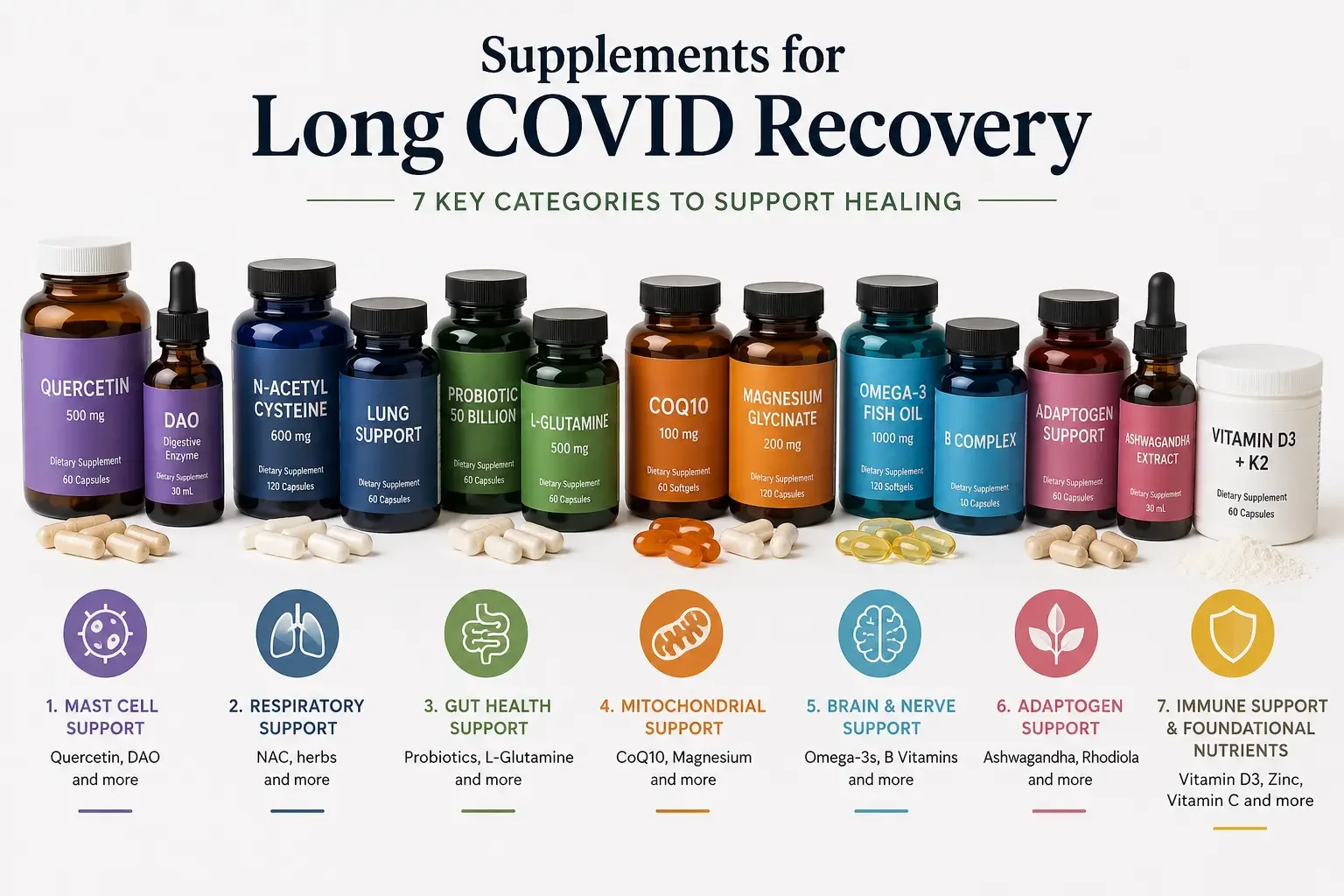
This category is one piece of a larger recovery framework. Choosing respiratory supplements for Long COVID that address both the antioxidant and inflammatory sides of lung damage, rather than picking just one product, makes the biggest difference in outcomes. For the complete picture of how respiratory supplements for Long COVID fit alongside mast cell, gut, mitochondrial, and cognitive support, see our full guide: Supplements for Long COVID Recovery: 7 Essential Categories to Reclaim Your Health.

Lung tissue heals slower than most other systems affected by Long COVID, so patience matters here more than almost anywhere else in your recovery. Work with a functional medicine practitioner familiar with post-viral respiratory recovery to fine-tune dosing and sequencing for your specific situation, especially if you are also managing prescription medications or existing lung conditions. Committed, consistent use of respiratory supplements for Long COVID over several months tends to produce the most reliable results.

Sources referenced include peer-reviewed studies indexed in PubMed and PubMed Central. Links to primary research are embedded throughout this article.

Visited 28 times, 1 visit(s) today
Close Search Window
Close