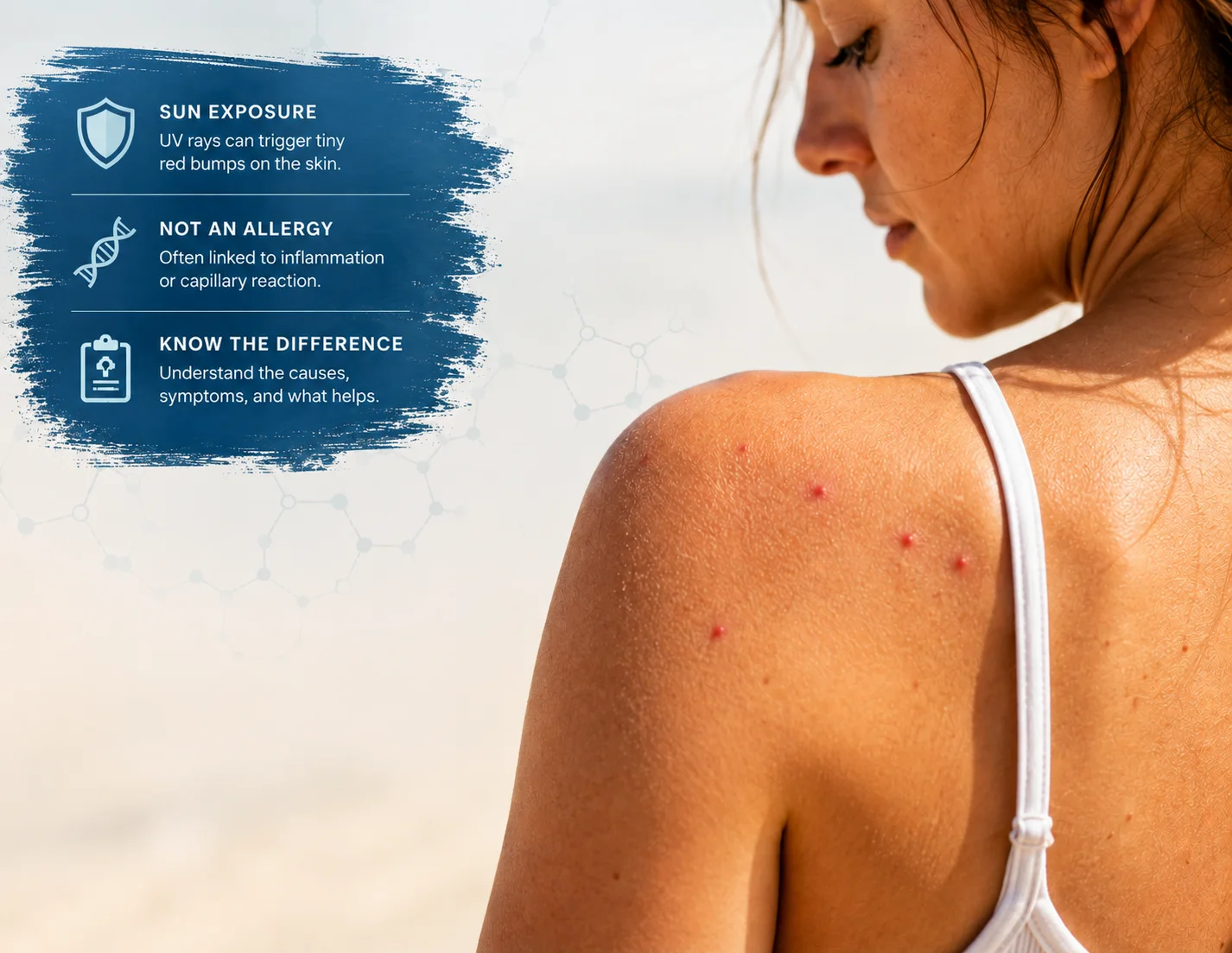
We just got back from a much-needed trip to Jamaica, soaking in the sun, saltwater, and good vibes. Everything was perfect — until we noticed some weird, tiny red dots showing up on my lady’s skin.
At first, we panicked a bit. They looked like little blood blisters or maybe bug bites — but they weren’t itchy or painful. Just… there. Bright red, raised, and new.
Naturally, we went down the rabbit hole. And what we found out? Nothing to worry about.
They’re called cherry angiomas, and they’re surprisingly common — especially after a few days of sun exposure.
What Are Cherry Angiomas?
Cherry angiomas are tiny clusters of blood vessels under the skin, usually bright red and slightly raised. They’re typically 1 to 5 millimeters in size and can pop up anywhere — arms, shoulders, torso.
They’re not itchy. Not painful. Not contagious. And not dangerous.
Most people start seeing them after age 30, but sun exposure, hormones, or even genetics can cause them to appear earlier — or suddenly, like in our case.
What Causes Them?
Here’s what’s known to trigger cherry angiomas:
- Sun exposure (yep, our biggest suspect)
- Aging
- Hormonal changes — like stress, menopause, or pregnancy
- Genetics — runs in families
- Chemical exposure — including some found in skincare products
- Rarely, they can be a sign of metabolic or liver issues, but that’s usually only if you get a ton of them out of nowhere along with other symptoms
Should You Be Worried?
Honestly? No.
Cherry angiomas are benign and harmless. Dermatologists consider them a normal part of skin aging. But it’s smart to keep an eye on them if:
- They suddenly appear in large clusters
- One starts bleeding, changing color, or growing fast
- You’re also experiencing fatigue, yellowing skin, or other red flags
In our case, they were just a harmless sign of too much sun. But that doesn’t mean we’re running to the store for sunscreen.
Sunscreen: More Harm Than Help?
Here’s the truth that’s rarely said out loud:
Most commercial sunscreens are loaded with toxic garbage that does more damage than the sun ever will.
We’re told to fear the sun and slather ourselves in SPF daily — but many popular sunscreen ingredients mess with your hormones, damage your cells, and get absorbed into your bloodstream.
Just look at some of the research:
- Oxybenzone — linked to hormone disruption and found in blood samples after a single use. FDA study, 2020
- Octinoxate — a known endocrine disruptor that can affect thyroid hormone levels. European Commission SCCS, 2021
- Retinyl palmitate (vitamin A derivative) — may increase skin cancer risk when exposed to sunlight. NTP study, 2012
Add to that fragrance chemicals, parabens, PEGs, and more — and you've got a cocktail of hormone havoc baked into your "safe" sun protection.
What to Do Instead?
We didn’t use sunscreen the entire trip — and we were fine. Here’s what we did do:
- Got gradual sun exposure, especially early in the morning
- Stayed hydrated and got shade breaks when needed
- Used natural oils like coconut and jojoba on the skin (they have mild SPF)
- Took antioxidants like vitamin C, quercetin, and astaxanthin to support skin defense
- And let’s not forget — the sun is a natural source of vitamin D, which most people are severely lacking
So no — those little red dots weren’t cancer, weren’t dangerous, and didn’t need a trip to the doctor. Just another reminder that the body reacts to what we feed it — sunlight included.
Final Word
If you see tiny red spots show up after a few days in the sun, it’s probably nothing serious — just cherry angiomas doing their thing.
But don’t rush to slather on drugstore sunscreen. The real danger might not be the sun — it’s what you’re told to use against it.
Respect the sun. Don’t fear it. And stop letting toxic sunscreen companies sell you cancer in a bottle.
Sources
- https://jamanetwork.com/journals/jama/fullarticle/2765271
- https://ec.europa.eu/health/scientific_committees/consumer_safety/docs/sccs_o_217.pdf
- https://ntp.niehs.nih.gov/results/pubs/longterm/reports/longterm/tr500580/listed-bya/
- https://www.ncbi.nlm.nih.gov/pmc/articles/PMC3140120/
- https://www.aad.org/public/diseases/a-z/cherry-angiomas-overview
For related reading, explore sunscreen, vitamin D, and UV exposure, calcium deposits in joints and tendons, and our General Health section.