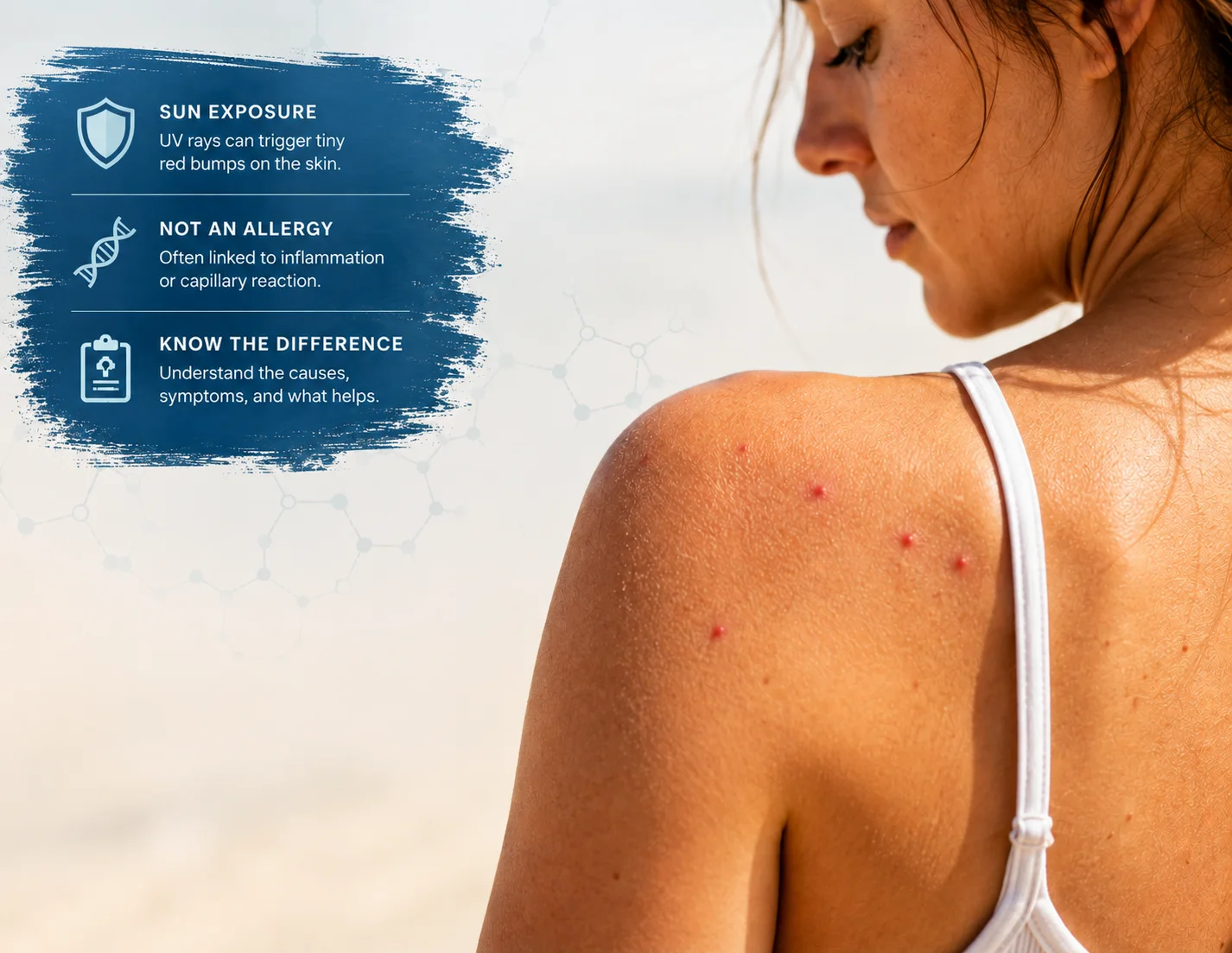
I have never liked the idea that normal sun exposure should automatically be treated as something dangerous that must always be blocked.
At the same time, ultraviolet radiation can damage DNA and is a known risk factor for skin cancer. The useful conversation is not “sun good, sunscreen bad” or the reverse. It is about dose, skin type, burning, vitamin D, product ingredients, and how people actually use sun protection.
Recent research has also changed part of this debate. A 2025 randomized trial found that routine daily SPF 50+ sunscreen use lowered vitamin D levels compared with discretionary use.
UV exposure is a recognized skin-cancer risk factor. Clinical trials show systemic absorption of several chemical sunscreen ingredients, but absorption alone does not prove harm. A 2025 randomized trial found that routine daily SPF 50+ use lowered vitamin D levels compared with discretionary use, updating earlier lower-SPF evidence that found little effect.
High-SPF Daily Use Can Affect Vitamin D
Vitamin D is produced in skin after UVB exposure. Older real-world studies using lower-SPF products generally found little effect on vitamin D levels.
The newer Sun-D randomized trial followed more than 600 Australian adults for about a year. People assigned to routine SPF 50+ use had lower 25-hydroxyvitamin D levels and a higher prevalence of vitamin D deficiency than the discretionary-use group.
So the claim that sunscreen can never affect vitamin D is no longer accurate. How much it matters depends on how much is used, SPF, sun exposure, skin type, diet, and supplementation.
Some Sunscreen Chemicals Are Systemically Absorbed
FDA-led clinical trials have shown that several chemical sunscreen ingredients, including oxybenzone, avobenzone, octocrylene, homosalate, octisalate, and octinoxate, can be absorbed into the bloodstream under study conditions.
That finding means additional safety research is reasonable. It does not by itself prove that the absorbed levels cause cancer, hormone disease, or other chronic illness.
UV Exposure Is Not Harmless Either
Natural does not automatically mean harmless. Ultraviolet radiation can cause sunburn, skin aging, DNA damage, actinic keratoses, and skin cancer.
The National Cancer Institute lists UV exposure as a skin-cancer risk factor. Evidence that sunscreen prevents every type of skin cancer is less clean than many people assume, but avoiding repeated burning and excessive UV exposure is still biologically sensible.
What Does the Cancer Evidence Actually Say?
Sunscreen clearly reduces sunburn. Evidence for prevention of actinic keratoses and squamous-cell damage is stronger than the evidence for melanoma prevention.
Studies of sunscreen and melanoma are difficult because people at highest risk often use the most sunscreen, and sunscreen users may also stay in the sun longer.
That is another reason I do not like absolute claims on either side.
A Better Way to Think About Sun Exposure
I prefer a balanced approach rather than treating all sun exposure as dangerous.
Skin type, latitude, season, time of day, previous skin cancer, medications, and how easily someone burns all change the risk.
Shade, clothing, hats, timing outdoor activity, and avoiding burns are ways to reduce excessive UV exposure without depending entirely on sunscreen.
Do Not Guess About Vitamin D
If vitamin D is the concern, test it.
Someone with low blood vitamin D may need more dietary vitamin D, supplements, or a change in sun-exposure habits. A blood test gives more useful information than assuming every sunscreen user is deficient or every person who gets sun has an adequate level.
What I Would Not Claim
I would not claim that sunscreen has been proven to cause cancer, immune failure, or widespread chronic disease. Current human evidence does not establish those claims.
I also would not claim that daily high-SPF sunscreen has no tradeoffs. We now have randomized evidence that it can lower vitamin D, and absorption studies show that several chemical filters enter the bloodstream.
The Bottom Line
The sunscreen debate needs more honesty and less absolutism.
UV exposure has real risks. Some sunscreen ingredients are absorbed. Daily high-SPF use can reduce vitamin D status. The best approach depends on the person's skin, health, environment, and exposure pattern.
I would rather understand those tradeoffs than pretend one side of the debate has no downsides.
For related reading, explore obesity and health risk, red dots after sun exposure, and our General Health section.