

Of all the hormonal issues that affect women over 40, thyroid dysfunction is one of the most common and one of the most frequently missed.
Women are five to eight times more likely than men to develop a thyroid condition. The risk increases with age. Many women spend years cycling through symptoms like fatigue, weight gain, hair loss, brain fog, and depression before anyone thinks to do a thorough thyroid evaluation. When they finally get tested, they are often told their results are normal when a closer look tells a different story.
Thyroid health for women is not a niche topic. It sits at the center of energy, metabolism, mood, and hormonal balance. This guide covers what the thyroid does, how to recognize when it is not working properly, how to get tested correctly, and what natural support actually helps. This is part of our complete guide to women's hormonal health.
Why Thyroid Health for Women Deserves More Attention
The thyroid gland sits at the front of your neck and produces hormones that regulate your metabolism, the rate at which every cell in your body converts fuel into energy. It affects your heart rate, body temperature, digestion, muscle strength, bone density, mood, and brain function. When the thyroid is working well, you barely notice it. When it is not, the effects are felt throughout your entire body.
According to the American Thyroid Association, approximately 20 million Americans have some form of thyroid disease, and up to 60 percent are unaware of their condition. Women are disproportionately affected. The lifetime risk of a woman developing a thyroid condition is estimated at around one in eight.
Despite how common thyroid dysfunction is, it remains undertested and underdiagnosed. Standard thyroid screening often uses only TSH (thyroid stimulating hormone), which misses a significant portion of women with functional thyroid problems. Understanding thyroid health for women means understanding why that matters and what more comprehensive testing looks like.

How the Thyroid Works
The thyroid produces two main hormones: T4 (thyroxine) and T3 (triiodothyronine). T4 is the storage form, produced in larger amounts but relatively inactive on its own. T3 is the active form that actually enters cells and drives metabolic activity. Most T4 must be converted to T3 in the liver, gut, and other tissues before it can be used.
This conversion process is where many women run into problems. Even when the thyroid is producing adequate T4, poor conversion means cells do not receive enough active T3. This can happen due to chronic stress (which elevates cortisol and suppresses T4 to T3 conversion), nutrient deficiencies (particularly selenium and zinc), gut dysfunction, and inflammation.
The production of thyroid hormones is controlled by the hypothalamus and pituitary gland through a feedback loop. The pituitary releases TSH to stimulate the thyroid to produce more T4 and T3. When thyroid hormone levels are adequate, TSH drops. When they are low, TSH rises. This is why TSH is used as a marker for thyroid function. But as the conversion picture above shows, TSH alone does not tell the full story.
The Most Common Thyroid Conditions in Women
Hypothyroidism (Underactive Thyroid)
Hypothyroidism occurs when the thyroid does not produce enough thyroid hormone to meet the body's needs. It is the most common thyroid condition in women and becomes significantly more prevalent after 40.
Primary hypothyroidism involves the thyroid gland itself failing to produce adequate hormones. Secondary hypothyroidism involves the pituitary or hypothalamus failing to send the right signals to the thyroid. Subclinical hypothyroidism describes a state where TSH is elevated but T4 and T3 are still technically in range. This is the grey zone where many symptomatic women fall and where standard screening often fails them.
Hashimoto's Thyroiditis
Hashimoto's is an autoimmune condition in which the immune system mistakenly attacks the thyroid gland. It is the leading cause of hypothyroidism in developed countries and is far more common in women than men.
In Hashimoto's, thyroid antibodies (TPO antibodies and thyroglobulin antibodies) gradually damage thyroid tissue over time, reducing its ability to produce hormones. Thyroid function often fluctuates in the early stages of Hashimoto's, causing symptoms that alternate between hypothyroid (fatigue, weight gain, brain fog) and hyperthyroid (anxiety, heart palpitations, insomnia).
Many women with Hashimoto's are told their thyroid is fine because TSH is in range. Antibody testing is not always included in a standard thyroid panel and must be specifically requested. Research on Hashimoto's prevalence consistently shows that it is significantly underdiagnosed, particularly in younger and perimenopausal women.
Hyperthyroidism (Overactive Thyroid)
Hyperthyroidism occurs when the thyroid produces too much hormone. The most common cause in women is Graves' disease, another autoimmune condition. Symptoms include unexplained weight loss, heart palpitations, anxiety, tremor, heat intolerance, and irregular periods. It is less common than hypothyroidism but equally important to recognize.

7 Warning Signs of Thyroid Dysfunction in Women
Thyroid health for women is complicated by the fact that thyroid symptoms overlap significantly with other hormonal issues including estrogen decline, perimenopause, and chronic stress. Here are the seven warning signs most worth paying attention to.
1. Persistent Fatigue
Fatigue is the most universal thyroid symptom. It is a specific type of tiredness: heavy, dragging, and not improved by sleep or rest. Many women with hypothyroidism describe feeling like they are moving through water or carrying an invisible weight. It does not respond to caffeine, extra sleep, or lifestyle changes the way normal tiredness does.
2. Unexplained Weight Gain or Difficulty Losing Weight
When the thyroid is underactive, metabolism slows. Calories that would normally be burned are instead stored. Many women with hypothyroidism find that standard diet and exercise approaches produce little to no weight loss, or that weight creeps up even when nothing in their diet has changed. This is one of the most frustrating and misattributed symptoms in thyroid health for women.
3. Hair Thinning and Loss
Thyroid hormones are essential for healthy hair follicle cycling. Hypothyroidism causes hair to shift from the active growth phase to the resting and shedding phase prematurely. The result is diffuse thinning across the scalp, reduced hair density, and sometimes loss of the outer third of the eyebrows, which is considered a classic sign of significant hypothyroidism.
For a broader look at how hormonal imbalance shows up physically, read our guide on signs of hormonal imbalance in women.
4. Brain Fog and Cognitive Slowness
Thyroid hormones are essential for brain function. T3 directly influences neurotransmitter activity, myelin production (the protective sheath around nerve fibers), and brain metabolism. Low thyroid function slows all of these processes, producing symptoms of cognitive slowing, poor memory, difficulty finding words, and reduced mental sharpness that many women attribute to aging or stress.
5. Cold Sensitivity
Feeling cold all the time, particularly in the hands and feet, or having a persistently lower body temperature than normal, is a classic hypothyroid symptom. Because thyroid hormones drive the metabolic processes that generate body heat, an underactive thyroid reduces core heat production. This is distinct from the hot and cold fluctuations of perimenopause.
6. Constipation and Digestive Slowing
Thyroid hormones regulate gut motility, the rhythmic contractions that move food through the digestive tract. Low thyroid function slows gut motility, causing constipation, bloating, and sluggish digestion that does not respond well to increased fiber and water intake alone.
7. Depression and Low Mood
Low thyroid function is directly linked to reduced production of serotonin and other mood-regulating neurotransmitters. Women with hypothyroidism frequently present with depression as a primary complaint, and many are treated for depression for years before their thyroid is properly evaluated. If you are experiencing depression that is not responding to standard treatment, requesting a thorough thyroid panel is a reasonable and important step.
For a deeper look at mood changes related to perimenopause and hormones, read our guide on perimenopause symptoms and natural solutions.
Why Thyroid Problems Are So Often Missed in Women
The gap between how common thyroid dysfunction is and how often it is properly identified comes down to a few systemic issues.
Standard TSH-only testing misses subclinical hypothyroidism and conversion problems. A TSH in range does not mean adequate T3 is reaching cells. Without measuring free T3, free T4, and thyroid antibodies, a significant portion of thyroid dysfunction goes undetected.
TSH reference ranges are broad. The standard laboratory range for TSH is typically 0.4 to 4.5 mIU/L. Many functional medicine practitioners and thyroid specialists consider the optimal range to be 1.0 to 2.0 mIU/L. A woman with a TSH of 4.2 will be told her thyroid is normal. Clinically, she may be significantly hypothyroid by functional standards.
Thyroid symptoms are attributed to other causes. Fatigue gets attributed to stress. Weight gain gets attributed to diet. Brain fog gets attributed to aging. Depression gets treated as a psychiatric issue. The pattern of symptoms that points clearly to thyroid dysfunction is frequently fragmented into separate diagnoses rather than recognized as a whole.
How to Get Properly Tested for Thyroid Health
A comprehensive thyroid panel for women should include all of the following:
TSH is the standard screening marker. Useful but insufficient on its own.
Free T4 measures the available storage form of thyroid hormone.
Free T3 measures the available active form. This is the most functionally important marker and is frequently omitted from standard testing.
Reverse T3 measures an inactive form of T3 that can accumulate under chronic stress and block active T3 from working. High reverse T3 explains why some women have adequate T3 levels but still feel hypothyroid.
TPO antibodies (thyroid peroxidase antibodies) identify Hashimoto's thyroiditis. Elevated antibodies confirm an autoimmune attack on the thyroid.
Thyroglobulin antibodies provide additional confirmation of autoimmune thyroid disease.
If your doctor will only order TSH, consider requesting the full panel specifically or seeking a provider who will order it. Functional medicine practitioners, naturopathic doctors, and endocrinologists who specialize in thyroid conditions are more likely to test comprehensively.
Natural Ways to Support Thyroid Health for Women
Nutrition and Key Nutrients
Several nutrients are essential for thyroid hormone production and conversion.
Iodine is the primary raw material for thyroid hormone synthesis. T4 contains four iodine atoms and T3 contains three. Most people in developed countries get adequate iodine through iodized salt and seafood, but very low salt diets and avoidance of seafood can create deficiency. The key is adequacy, not excess. High-dose iodine supplementation can actually worsen thyroid conditions, particularly Hashimoto's, and should not be undertaken without medical guidance.
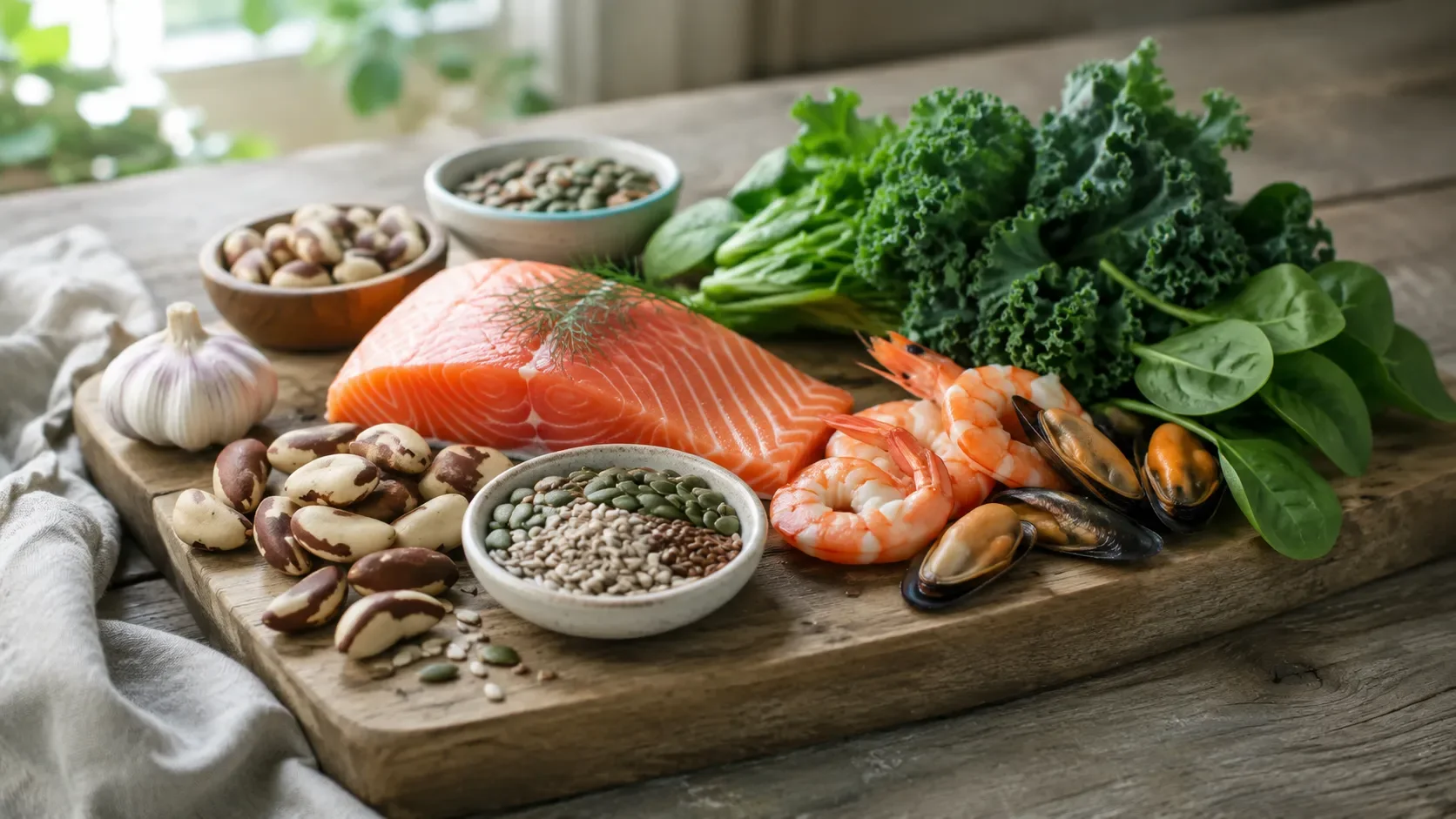
Selenium is essential for the enzymes that convert T4 into active T3 and that protect the thyroid from oxidative damage. Brazil nuts are the richest food source, with one to two nuts providing adequate selenium daily. Selenium supplementation (100 to 200 mcg daily) has shown benefit in women with Hashimoto's by reducing TPO antibody levels.
Zinc supports thyroid hormone synthesis and conversion. Low zinc is associated with reduced T3 levels. Food sources include beef, oysters, pumpkin seeds, and legumes.
Iron deficiency impairs thyroid peroxidase, the enzyme that produces thyroid hormones. Women with heavy periods are at particular risk. Testing ferritin (stored iron) alongside a thyroid panel is worthwhile for women with thyroid symptoms.
Avoiding goitrogens in very large amounts is sometimes recommended for women with thyroid conditions. Goitrogens are compounds in cruciferous vegetables and some other foods that can theoretically interfere with iodine uptake. In practice, normal dietary amounts of cruciferous vegetables are not a concern for most women. Cooking reduces goitrogenic activity. Only very high amounts of raw cruciferous vegetables in women with existing iodine deficiency are genuinely problematic.
Lifestyle Factors
Managing chronic stress is critical for thyroid health for women because elevated cortisol directly suppresses T4 to T3 conversion and increases reverse T3. Women with high stress loads often have functional hypothyroid symptoms even with technically normal thyroid panels.
Sleep quality directly affects thyroid function. TSH follows a circadian rhythm, peaking during sleep. Chronic sleep disruption alters TSH patterns and impairs thyroid hormone regulation. Prioritizing sleep is not optional in a thyroid support protocol.
Avoiding environmental toxins that disrupt thyroid function is meaningful over the long term. Fluoride in high amounts, perchlorate (found in some water supplies), and certain pesticides interfere with iodine uptake and thyroid hormone production. Filtering drinking water and reducing pesticide exposure through dietary choices supports thyroid health.
Supplements for Thyroid Support
Beyond selenium and zinc, ashwagandha has specific evidence for thyroid support. A randomized controlled trial found meaningful improvements in TSH, T3, and T4 in adults with subclinical hypothyroidism after 8 weeks of ashwagandha supplementation. It appears to work in part by reducing cortisol's suppressive effect on thyroid function.
Vitamin D deficiency is significantly associated with autoimmune thyroid disease, particularly Hashimoto's. Most women with Hashimoto's are vitamin D insufficient. Correcting deficiency to optimal levels (60 to 80 ng/mL) is an important step in managing the autoimmune component of thyroid dysfunction.
Magnesium supports the enzymes involved in thyroid hormone conversion and production and is broadly useful for the fatigue and sleep issues that compound thyroid symptoms.
For a complete guide to the most evidence-backed supplements for women's hormonal health, read our article on the best supplements for women over 40.
When to Talk to Your Doctor
Natural support for thyroid health is meaningful but it does not replace medical treatment for diagnosed thyroid conditions. If your testing reveals hypothyroidism, Hashimoto's, or hyperthyroidism, working with a healthcare provider on treatment is essential.
For hypothyroidism, the standard medical treatment is levothyroxine (synthetic T4). Some women do better on combination T4 and T3 therapy (such as desiccated thyroid extract) particularly those who do not convert T4 to T3 efficiently. This is a conversation worth having with a thyroid-knowledgeable provider if levothyroxine alone does not fully resolve your symptoms.
For Hashimoto's, reducing the autoimmune attack through dietary changes (a strict gluten-free trial is worthwhile for many women with Hashimoto's given the documented connection between gluten sensitivity and thyroid antibodies), optimizing vitamin D, selenium supplementation, and stress management can meaningfully reduce antibody levels over time alongside medical management.
Do not wait for symptoms to become severe before seeking evaluation. Early identification and support of thyroid dysfunction produces significantly better long-term outcomes for energy, weight, mood, bone density, and cardiovascular health.
Frequently Asked Questions
How common is thyroid disease in women over 40?
Thyroid dysfunction is very common in women over 40. The risk increases with age, and women are five to eight times more likely than men to develop a thyroid condition. Estimates suggest that up to 20 percent of women over 60 have some degree of thyroid dysfunction, much of it undiagnosed.What is the difference between TSH and T3 and T4?
TSH is produced by the pituitary gland and tells the thyroid to make more hormone. T4 is the storage form of thyroid hormone produced by the thyroid gland. T3 is the active form that cells actually use. Most T4 must be converted to T3 in the body before it can function. Testing only TSH misses the conversion picture that determines how much active thyroid hormone is actually reaching your cells.Can thyroid issues cause weight gain that does not respond to diet?
Yes. Hypothyroidism slows metabolism in a way that makes standard calorie-based weight loss very difficult. Many women with undiagnosed or inadequately treated hypothyroidism find that they cannot lose weight despite eating very little. Addressing thyroid function is often a necessary prerequisite for effective weight management in these cases.Is Hashimoto's disease serious?
Hashimoto's is a lifelong autoimmune condition that requires ongoing management. Left unaddressed it can lead to significant hypothyroidism, increased cardiovascular risk, pregnancy complications, and other autoimmune conditions. However, with proper medical treatment and lifestyle support, most women with Hashimoto's live full and healthy lives.Can you have thyroid symptoms with normal test results?
Yes, and this is one of the most common frustrations in thyroid health for women. TSH-only testing misses subclinical hypothyroidism, poor T4 to T3 conversion, high reverse T3, and early Hashimoto's with positive antibodies but normal TSH. Requesting a comprehensive thyroid panel is the way to get an accurate picture.Does perimenopause affect thyroid function?
The relationship is bidirectional. Estrogen fluctuations during perimenopause can affect thyroid hormone binding proteins, which influences how much thyroid hormone is available. Thyroid dysfunction can also worsen perimenopause symptoms significantly, making it harder to distinguish between the two. Women entering perimenopause with unexplained symptom burden should have a comprehensive thyroid evaluation as part of their hormonal workup.What is the best diet for thyroid health in women?
A whole-food diet rich in selenium, zinc, and iodine from food sources supports thyroid function. Including seafood, Brazil nuts, pumpkin seeds, eggs, and a variety of vegetables provides the key nutrients. Gluten-free eating is worth trialing for women with Hashimoto's given the connection between gluten sensitivity and thyroid autoimmunity. Avoiding excessive raw goitrogens is reasonable but not necessary for most women eating a varied diet.Your Thyroid Deserves Proper Attention
Thyroid health for women is too important to leave to a single TSH test and a reassurance that everything looks normal.
If you recognize yourself in the symptoms covered here, push for comprehensive testing. Learn what your free T3 and T4 look like. Check your antibodies. Understand your conversion picture. Then build a support strategy that addresses both the underlying function and the symptoms it is creating.
Natural support through nutrition, targeted supplementation, and stress management can make a meaningful difference alongside medical treatment. The two approaches work best together, not in isolation.
Sources referenced include peer-reviewed studies indexed in PubMed and PubMed Central. Links to primary research are embedded throughout this article.


