

Something shifted when you hit 40. Maybe it came on gradually, with a little more fatigue after work and a few extra pounds that did not used to be there. Maybe your sleep got worse, your drive at the gym faded, or you noticed changes in your mood or sexual interest that you could not quite explain. You chalked it up to a busy schedule, stress, or just getting older.
You are not imagining things. What you are experiencing is real, and it has biological causes that are well understood. Men's health over 40 is a genuine inflection point. The body you had at 25 operates differently at 45, driven by measurable hormonal and physiological changes that affect nearly every system in your body.
Here is the most important thing to know: most of these changes are manageable. Many are even reversible with the right approach. But they do not manage themselves, and they do not improve by ignoring them.
This guide covers the six most critical areas of men's health over 40 and gives you a practical framework for understanding where you are, where you want to be, and how to get there. Each section connects to a deeper resource where you can go as far as you want with any topic.
Why Men's Health Over 40 Deserves More Attention Than It Gets
Most men are raised with the message that pushing through discomfort is strength. Talk less about your health, tolerate more, and keep moving. That mindset serves men well in many areas of life. When it comes to health, it tends to backfire in a compounding and costly way.
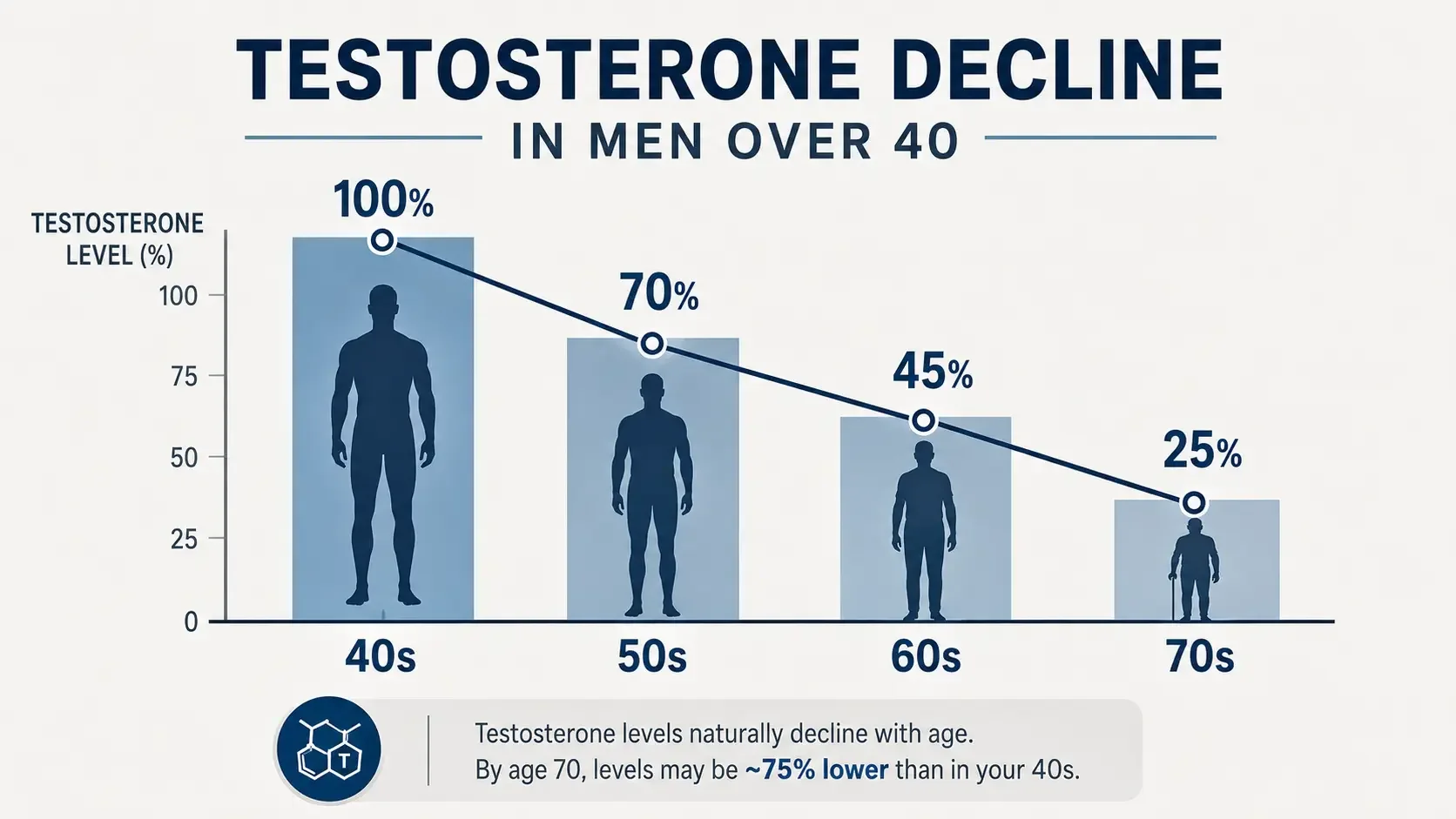
The hormonal shifts that begin in a man's 30s and accelerate through his 40s are not trivial. Testosterone levels decline at approximately 1 to 2 percent per year after age 30, according to research cited by the American Urological Association (American Urological Association: Testosterone Deficiency). By the mid-40s, that accumulated decline can be enough to affect energy levels, body composition, mood, sleep quality, libido, and cognitive sharpness in ways that are hard to ignore.
At the same time, cardiovascular risk rises, the metabolism slows, prostate health becomes a real consideration, and muscle mass begins to decline in ways that have long-term consequences for metabolic health and physical independence. These are not independent problems with separate solutions. They are interconnected systems that respond to the same core lifestyle levers.
The men who thrive through their 40s, 50s, and beyond are not the ones who got lucky. They are the ones who took these shifts seriously, got informed, and made targeted changes early enough to matter. Men's health over 40 does not require heroic effort. It requires awareness and consistency.
The 6 Core Areas of Men's Health Over 40
The sections below represent the most clinically significant and practically actionable areas for men in this life stage. Together, they form a complete framework for protecting your health and maintaining your performance as you age.
1. Testosterone: The Hormonal Foundation Every Man Over 40 Must Understand
Testosterone is the primary male sex hormone, and its influence extends far beyond what most men realize. It plays a central role in muscle mass development, bone density maintenance, mood regulation, cognitive sharpness, cardiovascular function, and energy metabolism. When testosterone is optimized, most systems in a man's body function better. When it is chronically low, almost everything suffers.
After 40, testosterone levels fall gradually but consistently. This process is sometimes called andropause, a term used to describe the gradual hormonal decline in aging men. Unlike female menopause, which occurs over a relatively short window of years, andropause unfolds slowly over decades, making it easy to miss.
Low testosterone, also called hypogonadism (a clinical term meaning the body is producing an insufficient amount of sex hormones), can cause fatigue, increased body fat, mood changes, reduced motivation, poor sleep, and reduced libido. Because these symptoms appear slowly and resemble stress or overwork, many men live with low testosterone for years before investigating it.
The encouraging news is that testosterone levels respond meaningfully to lifestyle interventions. Resistance training, quality sleep, dietary changes, stress reduction, and specific evidence-backed supplements all have documented effects on testosterone production. For many men, these strategies produce noticeable results within a matter of weeks.
How to Naturally Boost Testosterone After 40
Equally important is knowing whether your testosterone is actually low in the first place. Many men assume they are fine until they see their lab results, while others assume the worst without getting tested at all. Understanding the full range of symptoms associated with low testosterone helps you recognize whether a deeper investigation is warranted.
Low Testosterone Symptoms: How to Know If Your T Is Low
2. Erectile Dysfunction: More Common, More Treatable, and More Telling Than Most Men Know
Erectile dysfunction, or ED, refers to the consistent difficulty getting or maintaining an erection firm enough for sexual activity. It affects an estimated 30 million men in the United States and becomes increasingly common after age 40. Despite how prevalent it is, most men avoid talking about it for years.
That silence is understandable, but it carries a real cost. ED is frequently an early warning signal for underlying health issues including poor cardiovascular health, hormonal imbalance, impaired circulation, or metabolic dysfunction. Men who experience ED in their 40s have been shown to carry a measurably elevated risk of heart disease. Treating ED as a cosmetic or purely psychological issue misses the bigger picture.
The good news is that meaningful improvement is achievable for most men, and natural interventions are a legitimate first step for mild to moderate cases. Several well-researched compounds have been shown to support erectile function by improving nitric oxide production (nitric oxide is a molecule that relaxes and widens blood vessels, which is essential for blood flow to erectile tissue), reducing inflammation, and supporting hormonal balance.
L-arginine, an amino acid found in red meat and nuts, is one of the most studied compounds for this purpose. Maca root, a plant from the Peruvian Andes with a long history of use for sexual function, has also demonstrated meaningful effects in clinical trials. Ashwagandha, an adaptogenic herb (an adaptogen is a natural compound that helps the body manage physiological stress), has shown benefits for both testosterone and sexual function in peer-reviewed research.
Our dedicated guide on natural supplements for ED walks through the most evidence-backed options, how each one works, what dosages have been studied, and how to use them safely alongside or before pursuing pharmaceutical options.
3. Diet and Hormonal Health: How What You Eat Shapes Who You Become After 40
The relationship between diet and hormonal health is more direct and more powerful than most men appreciate. The foods you consume every day influence testosterone production, estrogen metabolism, thyroid function, insulin sensitivity (your body's ability to process blood sugar efficiently), and systemic inflammation. These are not peripheral effects. They are foundational.
After 40, the metabolic margin for error narrows considerably. A dietary pattern that was manageable in your 30s may now be contributing to hormonal disruption, weight gain, fatigue, and inflammation. Ultra-processed foods, refined carbohydrates, industrial seed oils like corn and soybean oil, and excess alcohol all have documented negative effects on hormonal function and metabolic health in aging men.
On the other side of the ledger, specific dietary patterns actively support hormonal balance and metabolic resilience. Foods rich in zinc, such as oysters, beef, and pumpkin seeds, directly support testosterone synthesis. Cruciferous vegetables like broccoli, cauliflower, and Brussels sprouts contain compounds called indole-3-carbinol and diindolylmethane (DIM) that support healthy estrogen metabolism in men. High-quality dietary fats from sources like eggs, olive oil, fatty fish, and avocados provide the cholesterol precursors the body needs to manufacture steroid hormones including testosterone.
Protein intake also becomes more important after 40, not just for muscle retention but for hormonal signaling. Men who consistently undereat protein tend to experience faster hormonal decline and greater muscle loss over time.
The Best Diet for Men's Hormonal Health
Our full guide on the best diet for men's hormonal health goes into the specifics of what to eat, what to limit, how to structure your meals, and which dietary approaches are best supported by the research for men in this life stage.

4. Muscle Loss After 40: Understanding Sarcopenia Before It Takes Hold
Starting in the early 30s and accelerating meaningfully after 40, men begin losing muscle mass at a rate of roughly 3 to 5 percent per decade. This process is called sarcopenia (pronounced sar-koh-PEE-nee-ah), and it is one of the most consequential and underappreciated aspects of men's health in midlife and beyond.
Muscle is not simply about how you look or how much you can lift. Lean muscle mass is one of the strongest independent predictors of metabolic health, insulin sensitivity, cardiovascular resilience, bone density, and longevity. Men with higher lean mass at midlife consistently show better health outcomes and physical function well into older age. Muscle is, in many respects, a metabolic organ.
The drivers of muscle loss after 40 include declining testosterone, reduced growth hormone production, lower physical activity levels, inadequate protein intake, and accumulated sleep debt. These factors tend to cluster together and reinforce one another, making the decline faster for men who are not actively countering it.
The research on reversal is genuinely encouraging. Resistance training, done consistently and with progressive overload (meaning you gradually increase the challenge over time), is extraordinarily effective at slowing, halting, and reversing sarcopenia. Studies have demonstrated measurable muscle gains in men in their 60s, 70s, and beyond who began resistance training for the first time. It is never too late, and it is especially impactful when started in your 40s.
Protein intake, sleep optimization, and targeted supplementation with compounds like creatine monohydrate and leucine-rich protein sources are additional tools that research supports for muscle preservation in aging men.
Why Men Lose Muscle After 40 and How to Stop It

5. Prostate Health: The Conversation Most Men Wait Too Long to Have
The prostate is a small gland, roughly the size of a walnut, located just below the bladder and in front of the rectum. It surrounds the urethra, the tube that carries urine and semen out of the body, and produces seminal fluid that nourishes and protects sperm. Most men pay little attention to their prostate until symptoms appear. By that point, preventive opportunities have often passed.
After 40, the prostate begins a process of gradual enlargement known as benign prostatic hyperplasia, or BPH. This is a non-cancerous condition, meaning it is not a form of cancer, but it causes real and disruptive symptoms. These include frequent urination, a weak urine stream, difficulty starting urination, a feeling of incomplete bladder emptying, and waking repeatedly during the night to urinate. BPH affects more than 50 percent of men by their 60s and an estimated 90 percent by their 80s.
Prostate cancer is the second most common cancer among men in North America, according to the American Cancer Society (American Cancer Society: Prostate Cancer). For most men, the discussion about prostate-specific antigen (PSA) screening, a blood test that measures a protein produced by prostate cells, should begin between ages 40 and 50 depending on personal risk factors including family history and ethnicity.
Nutrition, supplementation, and lifestyle choices all play measurable roles in prostate health. Lycopene, a powerful antioxidant found in tomatoes and other red and orange foods, has been studied for its protective effects on prostate tissue. Saw palmetto extract, zinc, and selenium have also been investigated for their effects on BPH symptoms and prostate function. The evidence is not uniform across all these compounds, and the details matter.
How These Six Areas Work Together
One of the most important things to understand about men's health over 40 is that these areas are not independent problems with separate solutions. They are deeply interconnected systems, and changes in one area create ripple effects across all the others.
Low testosterone, for example, accelerates muscle loss and promotes abdominal fat storage. Higher body fat elevates estrogen levels (men produce estrogen too, and levels that are too high relative to testosterone create real hormonal problems), which further suppresses testosterone. That cycle reinforces itself unless it is actively interrupted.
Poor diet drives chronic inflammation, which disrupts hormonal signaling at the cellular level, impairs sleep quality, and increases cardiovascular risk. Poor sleep reduces testosterone production by 10 to 15 percent and elevates cortisol, your body's primary stress hormone. Elevated cortisol further suppresses testosterone and slows recovery. The cycles compound in both directions.
When you address these areas together, improvements in one area tend to amplify results in others. Better sleep raises testosterone. Higher testosterone supports muscle retention and fat loss. More lean muscle improves insulin sensitivity. Better insulin sensitivity reduces systemic inflammation. Reduced inflammation supports better sleep quality. The virtuous cycle runs in your favor, and the momentum builds.
This interconnected nature is the reason a pillar approach to men's health over 40 is more effective than treating each symptom in isolation.
A Practical Starting Point for Men Over 40
The scope of this topic can feel overwhelming at first glance, but it does not have to be. A straightforward entry point exists for most men, and you do not need to address everything at once.
Start by building awareness of your symptoms. Low testosterone and hormonal imbalance are frequently dismissed as stress or aging because the symptoms appear gradually. Read through the low testosterone symptoms guide in this pillar and reflect honestly on what you are experiencing. Awareness is the foundation of everything that follows.
Next, get baseline lab work done. Ask your physician for a comprehensive hormone panel that includes total testosterone, free testosterone, SHBG (sex hormone-binding globulin, a protein that binds testosterone and determines how much is biologically active), estradiol, DHEA-S, PSA, and a standard metabolic panel. Knowing your actual numbers gives you a factual foundation instead of guesswork.
Address diet before supplements. Nutrition is the most powerful lever most men have not pulled. The dietary guide in this pillar offers a clear and practical entry point. Small, consistent changes to what you eat produce measurable hormonal benefits within weeks and create a better foundation for everything else.
Add two to three resistance training sessions per week. Even basic compound movements like squats, deadlifts, rows, and presses produce significant results for testosterone, muscle retention, and metabolic health. Start where you are and build progressively.
Then explore targeted supplementation. Supplements are not shortcuts, but the right compounds, at the right doses, based on your specific needs, can fill real gaps. The cluster articles in this pillar cover the most well-researched options for each area.
Frequently Asked Questions
What health screenings should men over 40 prioritize?
Men over 40 should discuss the following with their physician: blood pressure, fasting blood glucose and HbA1c (a three-month average of blood sugar levels), a full lipid panel including LDL and HDL cholesterol, a complete hormone panel including testosterone and PSA, colorectal cancer screening beginning at 45 for average-risk individuals, and a comprehensive metabolic panel. Timing and frequency vary based on personal and family health history, so use these as a starting conversation with your doctor rather than a rigid checklist.Can testosterone levels actually be improved naturally without hormone therapy?
Yes, meaningfully so for many men. Resistance training has been shown to acutely raise testosterone levels and support long-term hormonal health. Quality sleep, reduction of excess body fat, limiting alcohol consumption, managing chronic stress, and specific evidence-backed supplements have all produced measurable effects on testosterone in peer-reviewed research. The extent of improvement depends on how depleted levels have become and individual factors, but natural strategies are a rational and effective first line of intervention before considering hormone replacement therapy.Is erectile dysfunction inevitable after 40?
No. While ED becomes more common with age, it is not an unavoidable part of getting older. It is a symptom with identifiable causes including cardiovascular insufficiency, hormonal imbalance, impaired circulation, neurological factors, and psychological drivers. Addressing the root causes through lifestyle change, natural supplementation, or medical treatment produces significant improvement for most men. The fact that ED is common does not make it normal or untreatable.How much protein do men over 40 actually need?
Most functional medicine practitioners and sports science researchers recommend a target of 0.7 to 1.0 grams of protein per pound of bodyweight per day for men over 40, particularly to counteract muscle loss. This is higher than many standard guidelines suggest, and the research supports distributing protein intake across multiple meals rather than concentrating it in one large serving. High-quality sources include eggs, poultry, fatty fish, lean red meat, Greek yogurt, and legumes.At what age should men start discussing prostate health with their doctor?
The American Cancer Society recommends men at average risk begin discussing prostate cancer screening with their physician at age 50. Men at higher risk, including those with a first-degree relative who was diagnosed with prostate cancer before age 65, or men of African American descent who carry elevated statistical risk, should have that conversation at age 40 to 45. Regardless of formal screening age, prostate symptoms like urinary changes should be discussed with a physician whenever they appear.At what age should men start discussing prostate health with their doctor?
The American Cancer Society recommends men at average risk begin discussing prostate cancer screening with their physician at age 50. Men at higher risk, including those with a first-degree relative who was diagnosed with prostate cancer before age 65, or men of African American descent who carry elevated statistical risk, should have that conversation at age 40 to 45. Regardless of formal screening age, prostate symptoms like urinary changes should be discussed with a physician whenever they appear.What is the single highest-impact change a man over 40 can make for his health?
The research consistently points to resistance training as the highest-leverage single intervention available to aging men. It improves testosterone, preserves and builds lean muscle, enhances insulin sensitivity, reduces cardiovascular risk, improves sleep, supports bone density, and has documented positive effects on mood and cognitive function. If a man over 40 can commit to only one change, beginning a consistent progressive strength training practice is likely to produce the broadest and most durable benefits across every area covered in this pillar.How quickly can a man over 40 expect to see results from lifestyle changes?
The timeline varies by intervention. Dietary improvements can produce measurable changes in energy, inflammation markers, and blood sugar regulation within two to four weeks. Testosterone levels respond to resistance training and sleep improvements within four to eight weeks of consistent effort. Muscle composition changes become visually noticeable within six to twelve weeks of consistent training. Prostate and cardiovascular health improvements occur over longer timelines but are measurable within three to six months through lab work. The key insight is that results are not linear. Improvements accumulate and compound over time, which means early consistency pays dividends well beyond what early changes alone might suggest.The Bottom Line on Men's Health Over 40
Men's health over 40 is not about fighting aging or pretending the years are not accumulating. It is about understanding what is actually happening inside your body, making informed decisions, and taking targeted action that keeps you performing well and feeling genuinely alive for decades ahead.
The six areas covered in this pillar, testosterone, erectile function, diet and hormonal nutrition, muscle preservation, and prostate health, are not separate concerns. They are interconnected systems that respond to the same core inputs: consistent resistance training, high-quality nutrition, restorative sleep, stress management, and strategically chosen supplementation. When you pull these levers together, the improvements multiply.
You do not have to accept fatigue, weight gain, low drive, brain fog, or declining performance as an inevitable part of being a man over 40. The research is clear that men who take these areas seriously experience real and measurable improvements in how they feel, how they perform, and how long they remain capable and independent.
Use these resources to go deeper on the areas most relevant to where you are right now. Your health trajectory is not fixed. You have more control over it than you may realize, and the best time to use that control is before you need it badly.